Tuesday, October 19, 2010

No Corking Cork City!


Over the past decade Cork city has made considerable progress towards shaking its second city status as Dublin's little sister. As the city's confidence grows, so too does tourist confidence in it. Cork is fast building a reputation as an attractive mini-break location, earning itself a coveted pin on the tourist map of European city destinations.


The long term strategic planning of Cork City Council, notably based on recommendations made in the landmark Land Use and Transportation Study (1978), have made Cork a much more economically vibrant and tourist friendly location. Major pedestrianisation and redesign have transformed the city centre into an impressive shopping district and social hub, home to an increasing selection of gourmet restaurants and a diverse and lively nightlife scene. Cosy pubs and cafes nestle between trendy bars and music venues along the well kept side lanes that lead off Patrick street. The city also boasts larger venues, most notably the wonderful Cork Opera House, that regularly host high profile concerts and theatrical productions. A number of tourist attractions, such as the English market, Shandon Tower and the UCC campus-one of the oldest in Ireland-with its renowned Glucksman gallery, also provide an incentive to visitors.


Further contributing to Cork's elevation has been its designation in 2005 as the European Capital of Culture. This title, awarded on an annual basis by the European Union, brings with it a remunerative opportunity to generate significant social, cultural and economic benefits. This opportunity was embraced by Corkonians, who used their year of cultural events and celebration to buff the city's image and raise its international profile.


The buzz induced by the 2005 spotlight did not leave Cork with the European Capital of Culture title. Rather the city continued to develop its image, positioning itself as a lively and dynamic location, rich in spirit and cultural assets, including a wide range of arts and entertainment festivals. The largest of these are the upcoming Guinness Cork Jazz Festival and the Corona Cork Film Festival.


The city's heightened visibility and appeal has been recognised by the authors of the Lonely Planet, who, in their recent publication Best of Travel 2010, have named Cork as one of the top ten cities in the world to visit this year. Praising the city, the guide states: ‘Cork is at the top of its game right now: sophisticated, vibrant and diverse, while still retaining its friendliness, relaxed charm and quick-fire wit.’


The book’s editor remarks: ‘Cork has been in Dublin’s shadows for far too long, it has emerged as a fantastic destination in its own right with great restaurants, galleries, bars and shops as well as stunning scenery on its doorstep.’


Indeed Cork city is a threshold to some of the most beautiful landscapes and seaside towns in Ireland. Bantry, Blarney, Kinsale, Schull, Crosshaven, Cobh and Fota-to name but a few-are all popular with both Irish and foreign visitors. With recent improvements to road and rail, as well as the addition of a new terminal at Cork airport, the city is now even better positioned to facilitate tourist traffic to the greater Cork area.


With international lights shining on Cork the city is blossoming. 2010 is the year to visit, or revisit as the case may be. And there is no better time to do this than the upcoming October bank holiday weekend (22nd - 25th ), during which the annual Guinness Cork Jazz Festival takes place.

The festival is one of the social highlights of the Cork calender year, the city's atmosphere and charm peaking as the jazz beat leaks out onto the streets. A jewel in the crown of Cork city, the festival has grown from strength to strength over the years to become one of Ireland's largest cultural events, as well as an internationally celebrated fixture on the jazz calender. With music lovers flocking from all over the globe to mingle with the industry's leading jazz musicians and attend the festival's usual array of first-rate concerts and workshops, the city tend to fill up quickly . Early booking is advised.

 If jazz is not your thing then perhaps film is. Another great time to visit Cork is during the Corona Cork Film Festival, taking place this year between the 7th and 15th November. Now in its 55th year, the festival has grown in size and reputation to become one of Ireland's leading film events. With an eclectic programme of big budget movies, independent productions, world cinema, documentary and short art house film there is something on screen for everyone.
 With two of its most popular festivals still to come this year, Cork city refuses to forfeit itself to seasonal blues. One measure of a city's success as a tourist destination is its ability to attract visitors year round, rather than on a purely seasonal basis. Cork is proving itself on this ground. And on so many others too.

Ireland's second (but by no means least...) city has exploded onto the tourist scene with the vivaciousness and celebration of a champagne toast. For now at least there appears to be no corking it. To Cork!


This Article was published in the Trnity News Oct 2010. 

Thursday, October 7, 2010

Hvar, Queen of the Dalmatian coast


Last, but certainly not least, in our series on the Dalmatian coast is the up-market island of Hvar. This island is one of the most popular destinations in the Adriatic and can get extremely busy between the months of May and September, particularly in August when thousands of Italians flock here.  The medieval old town, rocky beaches  and vibrant nightlife appeal to both a young backpacker crows as well as well-off yacht owners and cruise-liner passengers.  


An original attraction to the island was its low cost, however as Hvar becomes more and more popular the prices continue to rise.  Having returned to Hvar myself after 7 years I can confirm that prices are indeed rocketing.  A number of five star hotels have popped up on the left side of the old town during my absence, forming a sort of resort quarter.  The island is well aware of its increasing exclusivity and restaurants and bars are marketing themselves in this direction.

 There are still cheap, affordable establishments to be found, bu a word of warning...... always check the menu and price list before entering.  Marianero is a good local restaurant, situated on a small square above the port on the left side of the town.  The food in Hvar is typical of that elsewhere in Coratia, with simple dishes of local seafood and grilled meats featuring on nearly all menus.  If yo fancy a break from this diet then there is a fabulous Japanese restaurant on the main pier where the ferry docks.  Small portions at high prices, but a nice change for the taste buds.  Watch out when ordering wine here as it can be very expensive.  

The highlight of Hvar for me is its nightlife.  Our landlady, Marija told us on arrival that Hvar is the Ibiza of Croatia.  While it certainly does not boast the mega clubs, flashing lights and intense music of the Spanish party island, it is undoubtedly the hot spot of nightlife in Dalmatia.  Sitting on the square at night provides a perfect people watching opportunity and a good chance to mingle with fellow holiday-makers.  There are many great bars along the port and if you go to the left of the main square there are plenty of bars the can accommodate large groups on the side streets.  When I was last in Hvar the focus of the late night partying was the nightclub 'up the steps', which took the form of a decrepit concrete amphitheatre with a caged pool in the centre.  The staunchness and grime of the venue was its charm.  Revisiting the club on my return I found a stylish, up-market empty venue with expensive drinks and flash furnishings.  It was mid September, so perhaps I had just missed the season....
An addition to the nightlife scene over the past few years is beach parties.  Boats filled with young and lively passengers head to nearby beaches in the middle of the night for some waterside partying.  Unfortunately I never managed to get myself on one... next time :)


Other features of Hvar include its castle, which perches at the top of the old town and offers a fantastic view down onto the port. There is a small admission fee into the castle, which houses a little museum, and unusually for many, allows you to explore its dungeons.  


Along with Dubrovnik, Korcula and Mljet, Hvar is a must do on a tour of the Dalmatian coast.  As with these other locations, if you are on a budget then just hop of the ferry and your accommodation will find you.  If you can afford to then there are lots of luxury hotels to relax in-the main benefit of these being that you can sprawl out by a pool, rather than on a rough, rocky shore!  


Tuesday, October 5, 2010

Lake island of Mlhet


Continuing on our tour of Croatia's Dalmatian Coast is the beautiful Adriatic island of Mljet.  The island's two lakes form the centre of a national park that is almost completely ringed by a well kept cycle path, which most tourists pedal along in order to take in the beautiful views of the sea lakes.  


Bicycles can be rented from the small port at the bottom of the ihill.  We were impressed with the quality of the bikes we were given and paid about €17 to hire them for 3 hours, although I think this was for a daily rate.  The cycle around the lakes is very quiet, with few vehicles using the ring.  It is not terribly strenuous, although getting up the hill to the start of the national park is a challenge.  As you cycle around the lakes you encounter small clusters of houses and cafes, where you can stop to rest and enjoy the view.  The restaurants along the lake are family run and pleasantly rustic, often with pets and naked toddlers running through them.  It is scenes like this that make me smile and yearn for island living.  


More expensive bars and restaurants can be found at the marina, where there is a small hub of activity.  The island is much quieter compared to Korcula or Dubrovnik, and so is often visited as a day trip from either.  We took a tourist boat from Lumbarda in Korcula for €30 pp, not including entrance fee to the national park at approximately €8 pp.    The journey was 2 hrs each way. If you don't want to make the trip in one day then there are plenty of accommodation options in Mljet, includ=ing the usual local rooms, as well as small hotels.  


Whatever way you decide to visit Mljet it is definitely worth it.  It is a stunning island that should not be overlooked on your visit to Croatia.  

Dublin Zoo-Must Do


Sun rises on Dublin zoo


Last week I had the pleasure of being one of a handful of bloggers invited to visit Dublin Zoo before the arrival of visitors for the day.  The 'behind the scenes' morning was cool and crisp, perfectly quiet but for the occasional  screech or bellow of wild animals.  Being there early in the morning really brought the incredible amount of upkeep and work that the animals need into perspective.  The zookeepers all presented as incredibly hard-working and devoted people, who knew their animals as well as if they were close family.  Some keepers were even able to trace the hereditary  line of their 'pets' back further than I could my own Granny's!  


We got to watch the zoo keepers feeding breakfast to the animals, including this grumpy orangutan, who showed his ingratitude at the earlier than usual start by hurling a rock at us bloggers!  


Arriving as we did with breakfast helped us to get closer than usual to the animals. This tiger in particular was happy to parade in front of the spotlight for the sake of his stomach.  


If anything he got a little too close.... Ahhhhh!


This was my first visit to the Dublin zoo in about ten years so I found myself in a good position to really appreciate the many changes that have taken place there.  And there has been many.  Dublin zoo has developed from a previously rather mediocre park to a world-class standard sanctuary.  The housing of the animals has improved ten-fold, as has the layout and design of the park itself.   The zoo is run in the spirit of conservation and education, rather than of spectacle, with the animals coming first, and visitors second.   Ironically the relegation of the visitor actually works to heighten their experience.  I left the zoo in high spirits, knowing and appreciating the level of care that the animals enjoy at their Irish home.  


All in all the zoo is a great day out, in particular for young families, like the one shown below :)  It is a fantastic place to both educate and entertain kids. Unlike many attractions, that suffer from the Been There Done That badge, the zoo can be revisited time and time again throughout the year to check in on the animals' development, new arrivals and the many positive changes taking place at the park.  An annual family pass is available and is well worth the money, particularly if you are living near to the Phoenix park.  


For more information on Dublin zoo, its projects, events and inhabitants Click here.


Thursday, September 23, 2010

Couple thrown out of hotel for writing negative TripAdvisor review


Here is an interesting story about a couple who were thrown out of the Golden Beach Hotel in Blackpool after being accused of writing a negative TripAdvisor review! I guess the lesson to be learned here is to close the gate before you slate!  Don't stop reviewing-it is an asset to tourist who follow in your footsteps-just do it after you leave!  This story has made its way into the press, resulting in a lot more bad publicity for the hotel than any Trip Advisor review could generate....a serious whoopsie on behalf of the hotel manager!  Read more  here.

Wednesday, September 22, 2010

Happy Arthur's Day!


Thursday September 23rd is upon us and, for the second year in a row, Ireland is preparing to celebrate Arthur's Day.  The people at Guinness have always been great marketeers, highly regarded for their clever and inspiring advertising campaigns, as well as the extremely successful World Records initiative. 


But their latest piece of PR pushing is close to ingenious.  What better way to shed a ray of light on a nation steeped in recession than to encourage them to do what they do best..... take to the streets drinking!  The creativity of this 'holiday' rivals even the Hallmark projects; it has a character (Arthur), a purpose  (raise a pint) and is strategically positioned exactly 6 months apart from Ireland's official day of boozing, St. Patrick's Day.  The addition of Arthur;s Day to the national calender is surely a permanent fixture and, in my opinion, certainly  a welcome one!  The sense of carnival induced by last years 250th anniversary celebrations did much to boost national morale, at least for the day.  Coming as it has during these dark times of high unemployment and overwhelming mistrust of the Government, Arthur's Day reminds us that being Irish means more than just being broke.  Being Irish means bring part of a community that is celebrated across the world for our music, dance, gift of the gab and of course, the craic!  

I for one will be raising a glass this evening.  If not to toast Arthur for giving us the black stuff, then to toast him for giving us an excuse to let our hair down!

Happy Arthur's Day!  


For more information on Arthur's Day visit the Guinness website.  


Tuesday, September 21, 2010

Korcula-Birthplace of Marco Polo Don't you Know?!


Korcula is one of the largest and greenest islands of the Dalmatian Coast.   It is an extremely fertile territory, well known for its olive oil as well as for winemaking, particularly dessert wines made from the grk grape.   During my numerous walks within the interior countryside of the island I spotted figs, butternut squash, tomatoes, citrus fruits and various other produce growing in the fields.  


The parameter of the island is made up of secluded coves, quiet strands and beaches, both rocky and of fine sand.  Swimming, kayaking, snorkelling and wind surfing are all popular activities. 


A little known fact, until you visit Korcula that is, is that the famous Venetian explorer Marco Polo, was actually born in Korcula.  A huge amount of shops, restaurants and hotels carry his name, so if a visitor is unaware of this fact on arrival, they certainly won't be on departure.  The island was controlled by Venice from the 14th to the 18th century, as is evident from the Venetian coats of arms adorning official buildings.


Korcula Old Town sits on a small hilly peninsula on the Northeastern side of the island.  The inside is made up of old churches, red roof houses and narrow winding streets.  It is often referred to as 'Little Dubrovnik'.  When you  look at its old walls, paved streets and historical structures it is easy to see why.  


There are of course noticeable differences to Dubrovnik Old Town.  Korcula is more compact and nowhere near as busy; you may even find yourself alone on a street or small square.  It does not possess the same elegance and sense of space of Dubrovnik, rather it appears slightly grubbier, less grand.  But this makes it feel older almost.  Compared to Dubrovnik, where the hun of restaurants, bars and cafes are located within the city's walls, the Old Town of Korcula is relatively quiet, with very little happening inside at night time.  


A strip of restaurants run the circumference of the exterior walls, offering views out onto the Adriatic.  They offer the same tourist priced fare as Dubrovnik, with local seafood, grilled meats and pizza homogenous to all menus.  There is also a good few bars and eateries in the new town, which is also nice to walk around.   One bar we wanted to visit, but were to early for is this terrace bar with a fantastic view of the sea and the Old town.  The cocktail bar allows visitors onto the terrace via a rather steep ladder.  Once a top they will send up your drinks via pulley system.  Probably best to visit here at the start of the night :)   It opens at 6 PM.  


As far as shopping is concerned I found that Korcula Old Town (and some stores outside) has the upper-hand on Dubrovnik.  But then I am a jewellery girl.  There are lots of good quality jewellery shops around, many specialising in turquoise and other stones. They can be expensive and the abundance of trinkets on offer can become overwhelming, but if you have the patience and purse to treat yourself you will find something nice.  if you are looking for a cheap fix then the usual junk is available on market stalls at the entrance to the Old Town.     


What I like most about Korcula is its relaxed island living.  Dubrovnik is for sightseeing, but Korcula is for holidaying.  For me a visit to the Old Town is merely a day trip to break up sleep days on the beach or more energetic walking/boating excursions.  You don't need to stay near to the old town.  Vela Luka and Lumbarda are both popular tourist destinations on the island, offering accommodation, activites, beaches and more.  


I wiled away a full week in Lumbarda, where the below photograph was taken, filling my days with countless swims, ice-creams, beers and afternoon snoozes.   


During our last few days in Korcula the weather began to get cloudy and slightly cold.  Without the sun the island loses a little of its charm so make sue to visit in the height of summer.  That goes for Croatia as a whole :)

Dubrovnik, the Pearl of the East


Famously referred to as 'the pearl of the Adriatic' by George Bernard Shaw, Dubrovnik is the tourist capital of Croatia.  The  city's well preserved walls and old town, named a UNESCO World Heritage Site in 1979, are the main attraction for visitors of all kinds, from  inter-railing backpackers right through to five star luxury cruise guests.  


Accommodation
Matching the huge span of visitors to Dubrovnik is a range of accommodation options.  The city has many standard guesthouses, as well as 13 of Croatia's 23 luxury hotels. For those on a lower budget there are plenty of hostels and a huge amount of rooms to let.  The latter is the best option, often working out cheaper than a hostel for a higher standard.  Most of the property surrounding the port and the old town has been converted to cater for tourists.  Rooms can be in dedicated accommodation properties or simply in the homes of local families. There are lots of self-catering mini-apartments available as well as standard rooms with shared bathrooms.  This being my 3rd visit to Croatia since 2003 I have noticed an increase in the quality of this type of accommodation.  


Prices will vary depending on demand, but the best value will be got when you get off the ferries or a bus.  Locals will swarm you offering their services.  They will have photos and maps of their accommodations and will be open to striking a deal so be prepared to haggle.  The ferries usually arrive early so don't worry about not being able to find anywhere to stay.  The majority of these rooms are not available online so you do need to book in person.


History
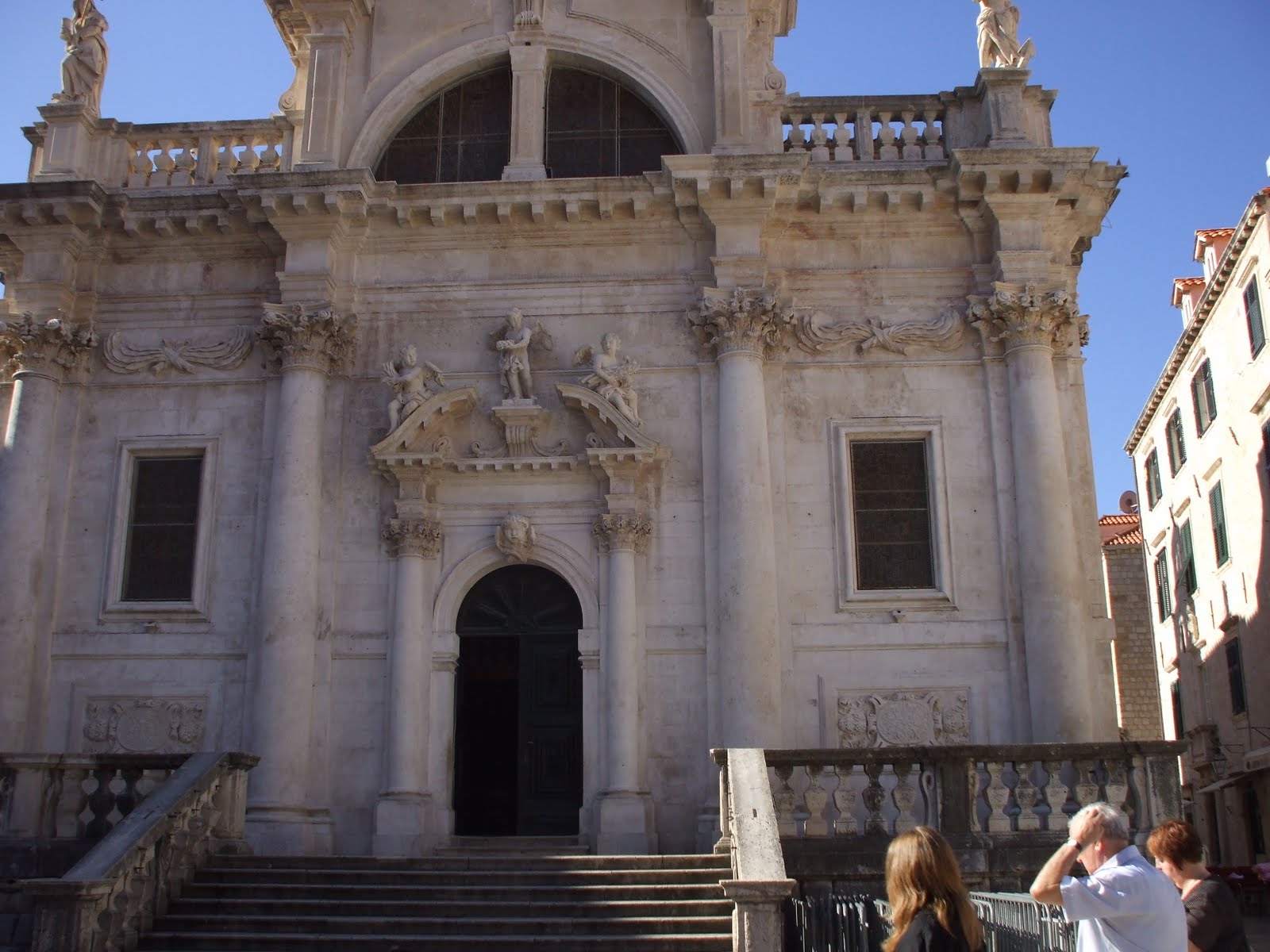
Formerly known as the Republic of Ragusa, Dubrovnik was originally built during the 7th century.  It thrived as a maritime trading port, coming second only to Venice at the peak of its success.  In 1667 the city was almost completely devastated by an earthquake.  It was rebuilt and restored by its residents, giving us the Dubrovnik that stands today.  


In more recent history, Dubrovnik was absorbed into Yugoslavia following World War 1.  it had previously been a monarchy, however after the assassination of King Alexander in France, his son, Prince Paul, developed a relationship with the Germans.  This proved to be poor judgement on his part.  In 1939 the German immediately ousted the Prince and , with the help of the Fascist Italians, invaded Croatia.  Ultimately Communist control took hold under Tito and the Iron Curtain fell over Croatia, Montenegro, Slovenia, Serbia and Boznia-Herzegovina.   After Tito's death in 1980 things began to disintegrate.  By the end of the decade Croatia had entered into  war with Serbia.  Fighting lasted until 1993, with Dubrovnik receiving the bulk of the impact.  Evidence of the conflict  can still be found in the old town today, adding further dimension to the historical draw of the city.  


The Old Town
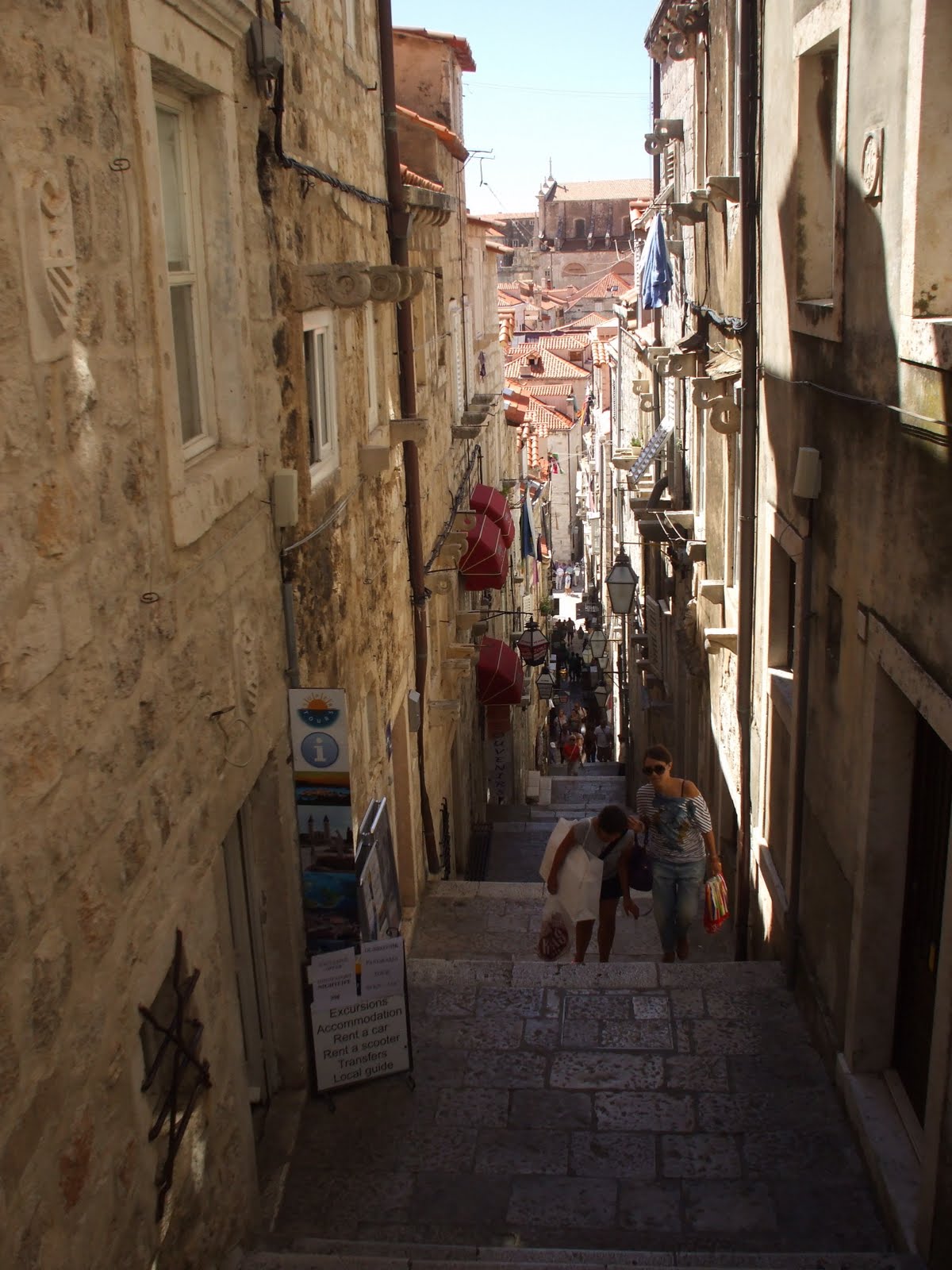
The fully pedestrianised and impeccably kept old town is a joy to explore and get lost within.   Its polished streets are noticeably absent of litter. Strict signage/frontage guidelines ensure that shops and restaurants fit snugly into the old town rather than distracting from or contradicting it. 


What will distract you from the lovely architecture and  intricate side streets is other tourists.  Between the months of April and October Dubrovnik is inundated with sightseers, many of whom share the holiday photographer's philosophy that he who holds camera need not look.   I cannot exaggerate the amount of times a sightseer blindly tripped across me while taking a photograph.  When not falling over others these tourists were being bashed into by similar minded people, who,  also taking photographs, failed to notice the abrupt halt, aim and snap of the person in front.  At times the swarm of the crowd was almost concert like.  If you want to avoid this then visit the old ton early in the morning before the cruise ships dock for the day.  The below photograph was taken before 9 AM.  Bliss :)


An absolute must do is walking the city's walls.  It costs €10 and will take about 1 hour.  As well as great views into the Old Town, you will be able to see the old port, the old monastery island of Lokrum and the stunning blue of the Adriatic.  


Water Babies
Of course you can enjoy the Adriatic close up.  There is an alcove just outside the Old Town walls that has been allocated to swimmers.  It is essentially a pier structure with ladder access into the sea, a perfect place to cool down and unwind after a busy day sightseeing 


For those of you looking to leave the crowds behind and bare all in the quest for line free tanning, take a ten minute boat ride to Lokrum, where there is a good naturalist beach. If you get bored of naked people watching you can also visit the old monastery and the botanical gardens.   


 Another way to enjoy the Adriatic is to go sea kayaking.  This is a popular activity in Croatia.  A 3 hour trip around Lokrum offers great views of the island as well as of the old walls of Dubrovnik.  Snorkelling equipment and a packed lunch-which we gobbled down after paddling up a serious hunger-are included in the price of €30 per person.  To book a tour just keep an eye out for reps on the old town bridge.  They will be holding paddles and handing out flyers so you cant miss them.  


Eating
Dubrovnik is packed full of cafes and restaurants. Their owners are aware of the town's popular tourist status and have learned to price accordingly.  The food in Dubrovnik -and Croatia as a whole- is best described as fresh, good quality produce presented with little imagination or flair.  Spicing and strong flavours are absent.  Restaurants offer a similar menu of local seafood and grilled meats at various prices from the middle road tourist traps to the gastronomic fancy pants spots with expensive offerings.  The rather homogenous menus and simple plates can become tedious after a while.  For cheap eats look to the many street side pizzerias selling take away slices from hatches.  The Italian influence has rubbed off well, with most of these houses using wood fired ovens.  Delicious slices can be bought for just over a Euro and are perfect for ending a night on the booze or for filling a gap.


Drinking
There are plenty of cafe/bars that serve alcohol on the streets and sqyares.  MAny of them also serve food and so can be a little more expensive.  If you are looking for more of a pub venue then head into the side streets, particularly those right of the main entrance to the old ton.  The Irish pubs are particularly busy spots.  Both 'the Irish Jig' and the newer, and might I say cleverly named, 'the Gaf' offer play live music from about 9 PM and tend to attract young, lively crowds.  They are right next to each other creating a mini hub within the side streets.  There are a couple of late night club type venues outside the city's walls, but the most popular one is Latino Fuego which is just a gew metres from the main entrance.  This is generally where all the tourists go to dance the nigh away.  


Shopping
I love to shop, but to be honest found very little to catch my eye in Dubrovnik.  There are lots and lots of souvenir shops but to be honest they are full of rubbish :).  


Day trips/Excursions/next Stops
There are other day trips and overnight excursions you can take from Dubrovnik. The Elaphite islands, Miljet, Korcula, Kotar (Montenegro), Mostar and of course, the pilgrimage town of Medjugorje (both in Bosnia),  are all within fairly easy reach of Dubrovnik.  The city does not have a train station, however it is well serviced by bus and of course by ferry, with Jadrolinija being the largest operator.  Transport is reasonably priced.  Buses are regular, but ferries tend to operate daily (usually at the crack of dawn) or a few times a week so if you are planning on moving on from Dubrovnik check the schedules on arrival so that you don't end up spending longer in the city than you had estimated.  During peak months it is a good idea to buy ferry tickets the day before travel as they can book up.  


Other Tips/Notes/Observations


Note that there are few and far between ATMs outside of the Old Town. 


The Croatians love to get the exact change or at least be handed cash that allows them to easily give back a single note or easy change, so carry lots of coins.  


I found Dubrovnik to be a really safe place.  I saw/heard no crime while there.  


It is also absent of beggars, which is refreshing and also slightly unusual for Eastern Europe. 

 When you go swimming it is important to have sandals that attach to your feet (as opposed to slip on ones). Although everyone knows this (beaches are rocky and also the sea floor is covered in urchins) there are not many shops that sell strap on waterproof sandals.  If you are stuck with this little problem like me then go to the internet cafe to the immediate right of the inside of the main gates.  They have a good selection of waterproof sandals.  


Aer Lingus flies a regular service into Dubrovnik from Dublin.  Very nice travel times too :)
Related Posts with Thumbnails